Sunday, July 24, 2016

8 Things You Should Know Before Making Entertainment For Your Brand


Hello friends and welcome to my 8-part blog mini-series unboxing what I believe are key factors to consider when you are thinking about pursuing entertainment for your brand/franchise. I’m posting these factors as weekly mini-posts to help break down this complex subject into bite-sized ideas.

Observations from Licensing Show.

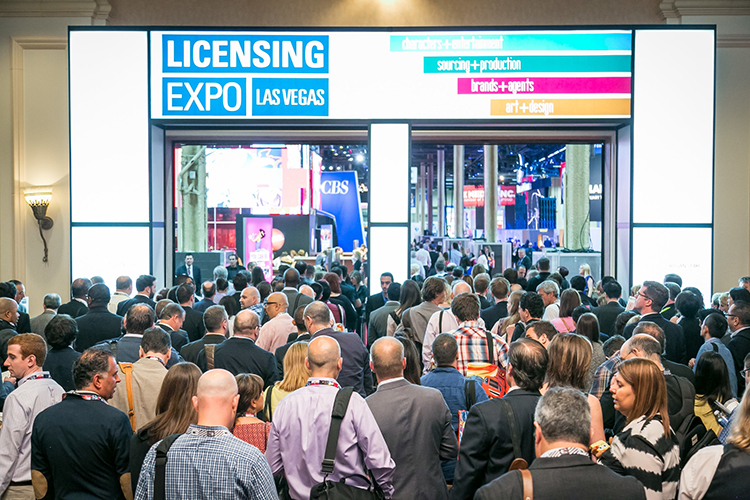
Crowds at 2016 licensing show

Very recently I attended the 2016 LIMA event in Las Vegas this year for four full days. It was perhaps the most energetic and well attended licensing show so far.  There were many trends and noteworthy observations to be made, but for me, the most interesting amongst them was the absolute explosion of brands and companies of all sorts that were considering, or committed to, creating entertainment for their brand.

This entertainment and character gold rush is understandable when one looks at the continual growth and success of character and entertainment licensing in general. What’s driving all of this? The audience: Millennial families in particular, are increasingly making stories they love, part of their own ongoing stories and lives.

There’s a lot that’s new in just that one statement but this 8-part blog series is going to focus on what I believe are some important understandings that any brand exec, manager or creator should know if they are considering creating entertainment for their brand.

Note: For those who are interested in a much deeper dive into Millennials and Gen-Z, we are hosting an all day seminar on October 28th in Newport Rhode Island to share those deeper insights and understandings on the subject.

Click here for Seminar information

8 Things You Should Know about Entertainment For Your Brand:


1.) Be sure that entertainment is the best answer for your brand.

Not all brands should have entertainment developed for them.  For brands today, success comes from delivering EXPERIENCES through your product or franchise that help your audience to discover and become more of who they want to be. This is as true for watching TV, going to a movie, or eating at a restaurant, as it is for playing with a video game or toy or wearing licensed clothing.

An entertainment story is one way to achieve inspiring aspirational change in your audience but it is by far not the only way to do so. 

A well conceived and innovative brand re-imagining that engages the consumer/audience with compelling experiences that can grow into a relationship can often be delivered through innovative products and plans that clearly deliver that benefit. 
the Art of Shaving Store and Experience

As an example, visit any of the growing number of “The Art Of Shaving” stores. When a guy enters the store, you become inspired by product, message and experience (even getting a shave), to become more of the kind of successful guy you’d like to be through grooming that connects you to the generational beard-tribe through shaving. 
Old technology made relevant by the brand story

They also get you to drop $250 on 100-year-old shaving technology proving that there is no such thing as old, only irrelevant…and they are relevant! They achieve this without entertainment or spokes-characters by delivering a rich and deep internal narrative experience.

Net/net, transformative experiences that build to a relationship are the key and entertainment is only one form of transformative experience.

It’s also important to note that there is a very, very, significant cost associated with developing entertainment. Putting a fraction of that cost into your brand/franchise work and developing experience-based engagement can sometimes have an equally large, or larger and longer lasting impact than entertainment.

Here’s some gating questions to establish if your brand is a good candidate for entertainment development.

  1. In what way does your brand help your audience to change themselves in positive ways and is entertainment the most powerful way to inspire that change?
  2. Is your brand’s business presently based on character affinity and if not, should it be? Story and character can’t artificially make product and services important unless they are fundamentally and organically important to the telling of that particular human story. Making a story just as a vehicle for product placement dilutes the story and can alienate your audience.
  3. Does the entertainment you are considering pursuing drive more than a single category of product to justify the profound time and money investment that will be needed?
  4. Do you have the financial depth to properly fund the entertainment and ongoing story relationship you will begin with your audience and/or do you have a brand with powerful enough equity to attract an entertainment partner?

This ongoing series will unbox those questions and other factors each week.

Next week’s post: Entertainment can reset and eclipse your existing brand's equity

Friday, April 1, 2016

5 things you should know about dual gender

Today, there is a lot of enthusiasm and encouragement for IP owners and managers to evolve or reinvent their IP to be more dual gender.  

Because our Meta-Story work cuts across such a varied cross section of both entertainment and product that is male, female, dual gender, older and younger, I have five important insights to share for those pondering what to do about the question of embracing dual gender for IP or brand.
Making the dual gender decision is not an automatic multiplier to your success. It can have a very positive effect, but it can also dilute or, in some cases, even reduce the brand and franchise adoption you are seeking from either or both genders.
Here are 5 key factors that anyone creating, managing or owning a brand or entertainment IP that is considering whether or not to lean into dual gender stories should know.

1.    There’s a big difference between ratings/box office and property usage/play patterns

I’ve recently read a number of articles suggesting that the IP and brands that will be the big winners in the near future will be dual gender. I think that there is some truth to that statement if the success you are seeking is box office, VOD downloads or TV ratings. It’s simple math. If your content is interesting to a broader audience then you have a better chance at bigger numbers.
Though this common sense rule is generally true, as the audience leaves preschool age and heads for their tweens, teens and young adulthood, robust dual gender becomes a lot trickier to achieve and may not be what your brand business is all about.
Additionally, what your audience/consumer shows up to watch does not necessarily translate into what they find relevant and useful in their lives on a daily basis and that is what drives commercial adoption and deeper loyalty.
As an example, we are seeing a strong trend across industries where the 6 and up boys are exiting or significantly reducing their usage of brands that had previously had strong 6 and up boy loyalty.  What we’ve found is that for male play and socialization, boys of this age need and hunt strongly male content (see point #5).
Several factors are contributing to why these boys are feeling that these brands no longer represent what they want and need at the point they are in their growth and lives. Underlying changes to the structure of the IP and entertainment that can happen when becoming more dual gender can be a significant contributor to that messaging. It is interesting to note that as reported in several recent articles, more of the work of becoming dual gender is happening in boy’s properties for a number of reasons. To be clear, there is a big, big difference between being gender inclusive/respectful vs homogenous (see point #3)

2.    The “Gender Structure” of your story is more important than the gender of your characters

It can be easy to think of creating dual gender success almost like it’s a spreadsheet with character gender boxes to check. If the gender balance sheet looks good then you’re on the right track to win with both boys and girls! Well...
Boys and Girls, Men and Women, instinctually move and resonate with the structure and themes of the story somewhat independent of the gender of the characters. Boys and men showed up in droves to see the new Mad Max movie with Charlize Theron solidly in the main protagonist role.
There are male structured stories, female structured stories and dual structure stories. Being aware of what you are making and carefully tuning it to deliver the results you are looking for is critical to post-entertainment adoption and retention of the audience and brand themes you want.

Well done stories of any structure can often get both genders to consume the entertainment. though it seems clear from both data and anecdotal evidence that girls are more likely to consume boy content than boys consuming girl content. This is largely because to tell a good human story you have to include social/emotional moves. In action stories this can give girls what they need as well as the action and excitement they want to be included in. To tell a good social emotional story you don't have to include the action and heroic elements and structures boys want and need.

Net/net, there are distinctly different power structures that each gender needs. 
The most direct way to explain the difference in the narrative gender power structures is with these two simple statements:
Female Power: I am more powerful when my tribe is more powerful!
Male Power: My tribe is more powerful when I am more powerful!
For the female structured heroic narrative the female hero is at the center of the tribe delivering on a key female imperative: healing the tribe’s dysfunction. There can be a little or a lot action involved (and girls today don’t want limits on their action and adventure) but fundamentally the resolve is driving towards healing the tribe.
For a male structured heroic narrative, the male hero stands outside the tribe to defend against all threats. He has emotional stakes in the tribe but the resolve is about defeating that threat, not primarily healing the tribe.
Meeting that threat often involves a unique kind of sacrifice known as “the hero’s choice.” Batman sacrifices his “normal” life in order to function as Batman. As a contrast, Disney’s Big Hero 6 is a good example of great male and female heroic roles in the story and a resolve that doesn’t impose a classic hero’s choice on the male hero. This story is dual gender with a more female structured resolve as he heals the tribe and as a team they vanquish the threat.
There’s a whole lot of other structure and narrative considerations that cascade from those two simple differences that I won’t dive into here.
What’s interesting is if you think of those structures as dials. Both can be at 10 or one at 0 and one at 10 and everything in between. It is being aware of how you are setting those dials that has everything to do with the commercial viability of your IP with both or either gender!
This is a key part of the reason why Video games seem to be gobbling up the guys at a younger and younger age. Yes, the play is very immersive. Yes, the worlds and action are seriously cool, but what may be the most important truth about video games and guys is that the structure of the “you-drive-it” narratives is overwhelmingly a male heroic resolve. Video games are the strongest “house of guy” on the planet right now and boys/guys instinctually join the tribe to find what they need for gender identity growth and rite-of-passage guy-community. (Let’s not roll the gender depiction issues for video games into this conversation. I recognize its importance but we’re focusing on illustrating narrative structure.)

3.    Inclusive vs homogenous

What’s really important in any story (brand or entertainment) is giving each gender what they need culturally, emotionally and developmentally.
It’s also important not to have characters inserted into stories or brands simply to deflect criticism.
I greatly prefer using the phrase “gender inclusive” versus dual gender or gender neutral because it describes, what I believe, is the strongest approach right in the title. 
a.     Understand what the business of your IP is (ratings/box office and/or boys, girls or dual gender commercial franchise)
b.     Structure the story to fulfill its intended role with the right empowerment and resolves.
c.      Include both genders in the story (not necessarily equal in numbers)
d.     Write each gender respectful of what they need within the context of your story and especially targeting the core commercial opportunity you have defined.
Within brands, it is also possible to have a single brand develop robust but separate offerings for each gender. Here too it is not about just turning up the pink or blue dial on the product. It is about delivering what each gender needs and wants at the life and cultural stage they are at.
Nerf is a great example of this kind success. The brand is inclusive of guys and girls but has distinct segments that are well tuned to each.

4.    Age is a big factor

Dual gender is much easier to achieve for preschoolers because prior to around 5 years old, boys and girls are in the business of building basic understandings of their world and making their first forays into non-ego-centric thinking. Though they are aware of being a boy or a girl and are beginning to absorb the cultural and familial gender examples, they haven’t yet moved into the ages of growing and exercising gender-based power.
Once past 5 or 6 years old, peer opinion becomes increasingly important. In fact, past preschool, one could say amongst peer opinion, same gender opinion ranks supreme.
The older a child becomes, the more they naturally tend to spend more time in single gender tribes to define what it means to be a guy or a girl by exploring and growing into life’s challenges in full collaboration with their chosen gender peers. We do this because, like most mammals, we have an inborn and important gender role to discover and contribute to the world and to our species.
Net/net, family culture starts the gender journey but community, gender tribes and mass culture take over defining what it means to “fit” into a gender.

5.    Boys and Girls have different needs

To talk about the differing needs of guys and girls we need to unbox what it means to live in The House of girl vs The House of guy, and why those two houses are important no matter what time in history we are living within.
In order to avoid accidental and kid-confusing gender engineering, we must understand the difference between cultural influences (that should be questioned and sometimes challenged), versus the natural and important developmental and community needs that can be different for boys and girls.
The house of Girl or the House of Guy, are a shorthand way of describing the big buckets of ideas, norms, cultural influences, outward messaging and inward journeys that each gender seeks to belong to as they seriously engage in their own journey into adulthood. This is definitely one of those concepts that boys and girls instinctively “know it when they see it,” and just as clearly, know when something does not have that gender identity nourishment and support built into it.
Brands such as American Girl have grown to amazing strength by living clearly in the house of girl and attaching a vision and higher purpose to it. These two houses often resonate with connection to girlness or guyness that cuts across generations, evolving as it progresses but including the best of gender goodness from the unbroken gender past.
Understanding these needs and these houses helps us to see that there are big differences between gender neutral, dual gender and gender inclusive.
It also helps us to filter decisions and ideas about gender positioning and to understand that there are some concepts that cannot be made commercially dual gender (vs gender inclusive) without losing a significant part of their commercial strength and the reasons why the audience loves it and wants to use it in their lives.

Going forward:


As we continue the important work of continual cultural evolution in our storytelling and brand management it helps to avoid seeing the discussion about gender balance in IP and brands as a single, simple statement that “the winners of the future will be dual gender.” History, biology, commerce and the kids themselves are telling us something more nuanced and powerful.  Instead, I like to think that getting good at being gender inclusive, whether I have a boy’s brand a girl’s brand or a true dual gender brand, is a great way to do right by both genders and do right by your business at the same time.

Tuesday, July 15, 2014

The Creator-Consumer

Today, the audience tells their story using parts of your story and you must recognize that an ongoing part of your story will now be told through their story.

Millennials: story adepts
Millennials are the natives to today’s amazing connectedness, having grown up swimming in its digital freedom.

Millennials are not only native to technology, they are true story natives.

By this I mean they have grown up soaked in stories 24/7/365. From Movies and Television to every form of mobile device, Millennials have had unrelenting access to every kind of story imaginable, long and short, since the day they were born. Rather than creating story confusion, burnout or numbness, Millennials treat the stories they encounter as a rapidly evolving language to explore and express themselves, a narrative toolkit of ideas and imagery.

Stories = Change
Stories have always been the primary means by which humans create change in themselves, their families, communities, institutions, countries and so on. In the hands of Millennials, stories are powerful and remixable tools of human change.

There is a clear process hardwired into humans for adopting stories in service of personal change. I’ve covered this at some length in previous posts (inspire, experience, badge and gather).

Millennials do this process particularly well through participating in, and often inventing, new ways to experience a story’s various ideas and empowerments. They create fan-art, fan-fiction, costumes to cosplay (costume play) with or LARP (live action role play) with. They adopt language from the story and often quickly create their own that expands your story. They game with it, wear it and generally remix it in thousands of ways with the other things going on in their lives. In short, they find what they like and then they really use it. In the process, your audience changes a little because of your story and your story changes (sometimes a lot) to meet them where they want to use it. Sometimes that use is short term. If you’re lucky and have created an IP that really empowers your audience with authenticity, truth and life-tools, your story will “stick” and become a profound part of your audience’s daily life through their usage and remix.

Remix as a business model
I believe strongly that story-driven audience remix is not just a phenomenon we’re watching reach flash-over real time with today’s audiences. I believe it should have a strong place in your plans for what you’re going to do with your franchise(s) if you want to be broadly commercial. As with any quickly emerging behavior and insight, I believe those IP holders and companies who think very creatively about how to help audiences use and change their stories in non-trivial ways, will be the early front runners. This can be an uncomfortable thought and feel like brand heresy to IP owners. Perhaps it makes it a little easier to accept by knowing the audience will do it whether you help them or not. By really leaning into remix, you become an authentic part of your audience’s community and in todays connected world, no amount of advertising spend can achieve what truly inviting your audience into the creators room will do.

To illustrate the point, I have an example of a new company that is seeing these changes and rethinking how to support how the audience wants to use today’s stories.  I have recently joined the board of a startup called Imagimod. They have developed a striking new mobile app where the audience can quickly, visually remix elements of their favorite IP to create and pose a custom sculpture of their own design that can be saved in 2D, shared, played with online, and even printed out in 3D using rapid prototype technology. You now have a one-off figure to collect, play or game with! Voila, play in the world of your favorite story but make it your own! It isn’t important whether or not this startup becomes hugely successful (though I hope they do). What is important is that what they are fundamentally embracing the narrative as a personal/changeable set of tools enabling the audience to make their own new part of your story (and their story) and get credit for doing so from their community.

Experience economy + Remix = Creator-Consumer
It’s this enabling of the role the audience wants to play in your story that is the kind of story thinking the audience will reward in IP they want to adopt. I have written in the past on “the experience economy” and wanted to connect the dots in this post that for today’s audience, the experiences they are most passionate about, and return to over and over again, are the ones they can truly make part of their story. It is important to respect that within most human beings, there is creativity.


Much the same way that smart phone cameras unleashed the photographer within everyone, the dawn of story remix is releasing the creator-consumer within us all.


Accreditation: Kevin Bradshaw, CEO of Imagimod, actually first coined the phrase "Creator-Consumer"

Tuesday, February 11, 2014

Commercial Stories in the Experience Economy

Are your entertainment or product brands generally struggling to show the kind of strength and growth you experienced in past years?

Are your new launches mired in the catch 22 of requiring big media and big spends to break through the noise yet drop like a stone when the big spend is dialed back? (Was that the sound of profitability’s little feet scurrying out of the building?)

Do you have content you believe might be franchise worthy but feel lost as to how to determine if that is true in today’s market?

What happened to the consumer you could clearly identify, develop and market to? What happened to loyalty, brand relationship and the power of a good media campaign? Is it as depressingly simple as the annoying adage: “if its not a game its not a go!” or is something else at work here?

Welcome to the “The Experience Economy.”

If people vote with their time and money (and yes they do), to tell us what they want and how they are changing, then it is very clear that there has been:

a rapid and profound shift from being a disposable consumer and acquisition economy to one where the audience is predisposed to making and seeking meaningful experiences versus acquiring stuff.

This step-change is being shaped and led by Millennials but the rest of us are enthusiastically following suit. 

This is just as true when it comes to the decisions the audience is making about entertainment as it is about products, brands and branded services for themselves and their families.

We’ve all gotten the memo “it’s all about the story” but clearly, the results are showing that it’s not just any story, but a story that can meaningfully fulfill the entire narrative adoption chain:

Inspire, experience, badge, gather

It is the second step in the adoption chain, “experience,” that is defining the nature of how Millennial’s are finding and actualizing what is important to them. Narrative experiences are also the currency most valued in the exchange of their curated content.

This means that if we want to have commercial success with a modern narrative, than that narrative and all it’s expressions (media and product) had better enable profound and meaningful real experiences!

Definition, A narrative experience: A real life event or series of events shaped by a useful narrative the audience has adopted.

The Nike FuelBand is a terrific example of a narrative experience created by the product itself. 

The story begins with the simple statement that all your movement “counts.” You begin wearing the bandz and quickly become aware of how and when you are moving and why. You start making small decisions to move more that become a virtuous circle of gaining stats, losing weight and moving more. You proudly display the product on your wrist as you share it with your friends and begin to see yourself differently. You invite them to try it and soon you are doing things, challenging each other, together! You are inspired and you are changing your own narrative to yourself to become a newer, better version of yourself. The narrative experience of Nike Bandz transforms your life and you own it. Inspire, experience, badge and gather.

Narrative experiences are experiences of self-transformation inspired by story. That story can be entertainment, product, service and more but…it really, really, has to be USEFUL and transformative in some part of your life.

To be clear, these experiences are not a rebellion against consumerism. They are a redefinition of what we are deciding is “valuable” and therefore willing to pay for.

The new economy is not being defined by what I have, but instead is being driven by the search for who I am.

So how do we succeed in the experience economy? I’d like to put forward what I believe are key concepts to embrace to make your company, your entertainment, your product, or your service, relevant and valuable for the millennial-led experience economy.

Here’s a few general rules of thumb for developing for the experience economy that represent shifts in thought culture:

1.    The consumer isn’t a consumer. They are an audience looking for life inspiration
2.    Today, the audience doesn’t want to just consume and acquire no matter the price (Sorry Walmart). They want to adopt and experience
3.    In all things you do, think and act in terms of WHO YOU ARE INSPIRING YOUR AUDIENCE TO BECOME!
4.    Seek deep insights into what inspiration you actually have (not the one you think you have) and how the audience really wants to “use” your story. It’s those contact points that are products and services.
5.    Products must be part of, or create, true narrative experiences
6.    Your narrative is yours only until you launch it. Then it belongs to your audience. Respect their ownership or they’ll move on.